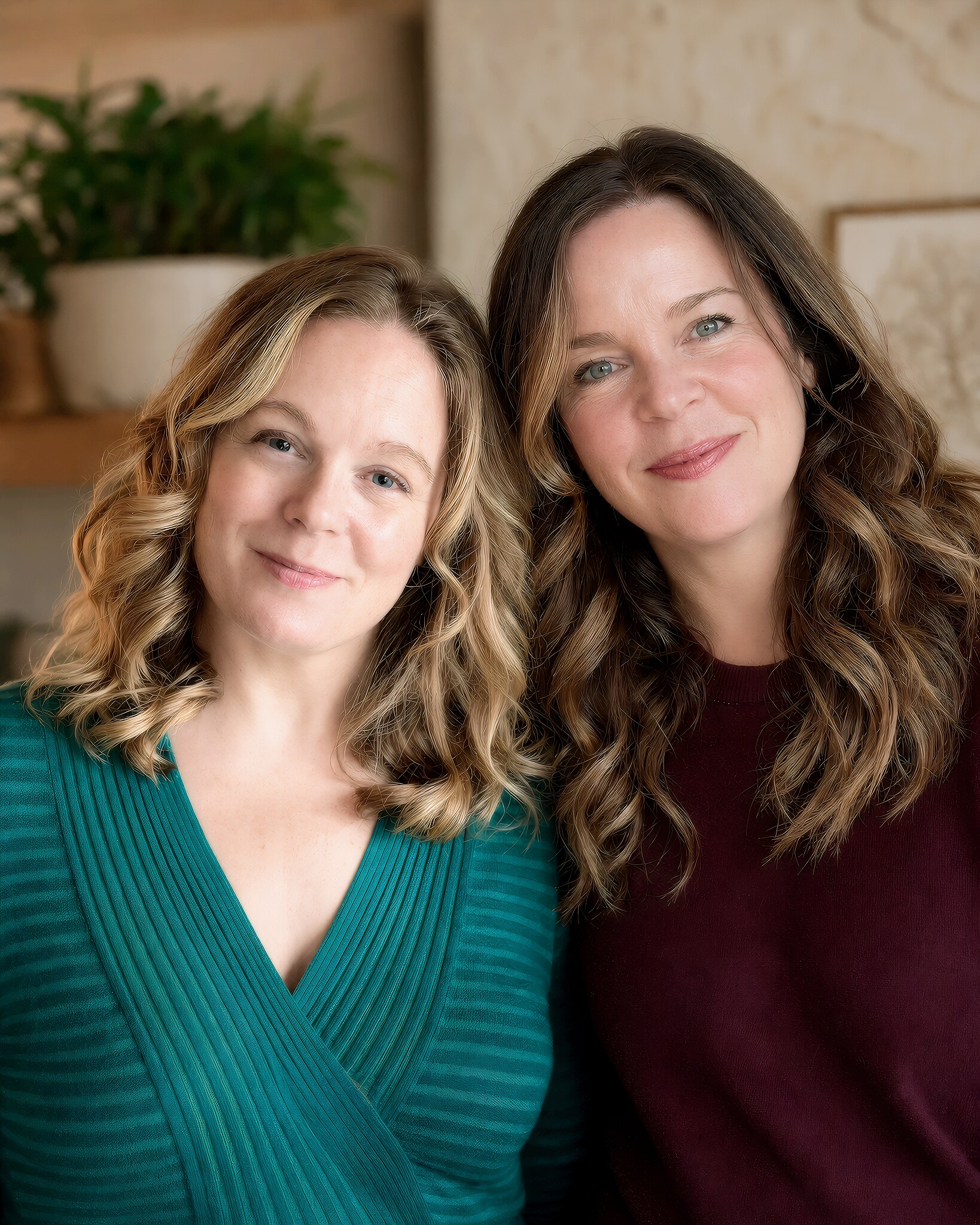
My sister Jen and I started Oak Bay Clean in July 2021 knowing nothing about the cleaning industry. Five years later it had generated more than $3 million in sales, and we had both quit our day jobs. Before this I taught school and Jen was juggling creative contracts. Neither of us had ever cleaned professionally, nor run a cleaning business.
I am telling you that up front because Jen and I have run one. We built Oak Bay Clean to $3M since 2021 without a van full of supplies, a narrow niche, or square-foot pricing. This guide is the actual path we followed, laid out day by day, with the real numbers behind it.
If someone else has already done it, why can't you?
Short answer: the fastest path for where you are right now
The best first move depends on where you are right now.
- You still have a 9-to-5 and you are nervous about leaving it. Keep the job. In month one you are working about an hour a day. Build the business in the early mornings and evenings and quit when the revenue makes the decision obvious, usually somewhere between $20K and $50K a month against your salary.
- You have very little money to start. Good. The model Jen and I teach costs hundreds to launch, not thousands, because your cleaners are independent contractors who bring their own supplies. Your actual costs are a website, a phone line, insurance, and your business registration. See our full breakdown in how much it costs to start a cleaning business.
- You want a company, not a job cleaning houses. Then plan from day one to hire cleaners and never pick up a mop yourself. The owners who scale are the ones who stop cleaning early.
- You want speed. Follow the 22-day path below in order. By day 22 you have your systems live, your first cleaner hired, and your first clients booked.
What a cleaning business is in 2026
A cleaning business that scales is a company you run. You connect clients who want their homes cleaned with independent contractors who do the cleaning. You handle the booking, the marketing, the pricing, and the support. The contractors bring their own supplies and set their own availability. Clients book online and pay after the clean is done.
If you clean every house yourself, your income is capped at the hours you can work in a week. With contractors doing the cleaning, you can grow past that ceiling while you run the company.
Kevin, who built his cleaning company to $40K a month in four months and then built the software ConvertLabs from those profits, says it plainly: "Do not clean. You'll stagnate. You cannot grow your business if you're cleaning toilets at the same time."
This matters because it changes your startup costs and your ceiling at the same time.
| The common setup | The contractor model Jen and I use | |
|---|---|---|
| Who does the cleaning | You, then employees you train | Independent contractors who bring their own supplies |
| Startup supplies | Vacuums, mops, products, a vehicle | None. Contractors supply their own |
| How clients book | They call, you play phone tag | Online booking widget, available 24/7 |
| When you get paid | You invoice and chase payment | Card on file, charged after the clean |
| Your ceiling | Capped by hours you can personally clean | Capped only by how many cleaners and clients you add |
This is a business that cannot be outsourced to China or automated away by Amazon. Homes need cleaning in every city, every week.
How much does it cost to start a cleaning business?
Less than almost any other business you could start. Because you are not buying supplies or equipment, your launch costs are the tools and the paperwork: a website and booking system, a business phone number, general liability insurance, your LLC registration, and a logo. For most new owners that is in the hundreds of dollars, not the thousands.
We break down every line item, with current prices, in how much it costs to start a cleaning business. The short version: this is one of the few legitimate businesses you can launch for the price of a few dinners out.
Over 11,000 organic views and zero ad spend, split into 22 short videos if four hours straight is too much in one sitting.
The 22-day path to launch, step by step
This is the exact checklist Jen and I built our own company on, and it is the foundation of everything we teach. Each day is one task. You can move faster if you have the time, and one step a day is plenty. Follow it in order and by day 22 you are open for business.
Phase 1 (Days 1–6): Set up the foundation
Day 1: Get your website and booking system live. Your website is where clients see your prices and book a clean without calling you. Jen and I use ConvertLabs because it gives you the site, the online booking widget, the card-on-file payments, and the dispatching in one place, built specifically for cleaning companies. You can start free for 30 days at convertlabs.io/blueprint. (A disclosure: we are ConvertLabs users and we earn an affiliate fee if you sign up through that link, at no extra cost to you. It is the only money in this for us, and we only point people to tools we use ourselves.) If you want to compare your options first, read our best cleaning business software breakdown. Watch the Day 1 tutorial.
Day 2: Research the competition. Look at the cleaning companies already winning in your city and in cities like yours. Note their prices, their service names, how they describe their packages, and what their booking flow feels like. Success leaves clues. What works for a cleaning company in another city will usually work for you in yours, because a company in Auckland is not competing with one in Cincinnati. Watch the Day 2 tutorial.
Day 3: Name your company. This is one of the most important early decisions, and there is a simple formula: location plus a keyword. Oak Bay Clean. Cincy Maids. Wexford Cleaning Services. Notting Hill Clean Co. Names like these get found on Google and in AI search because they say exactly what you do and where you do it. A clever name like Sparkle Unicorn Solutions does not. Watch the Day 3 tutorial.
Day 4: Customize your website. Add your name, your colors, your service areas, and your packages. Keep it clean and clear. A client should understand what you offer and book in under two minutes. Watch the Day 4 tutorial.
Day 5: Figure out your prices. Price by the home, not by the hour, and put a card on file so you charge after the clean. As a reference point, one of our standard biweekly cleans books at $362.25. We walk through exactly how to set your rates in our pricing guide (linked below once it is published). Watch the Day 5 tutorial.
Day 6: Design a horizontal and a square logo. You need a horizontal version for your website header and a square version for your Google Business Profile and social icons. Keep it inexpensive. A clean, readable logo beats a fancy one. Watch the Day 6 tutorial.
Phase 2 (Days 7–11): Tools and legal
Day 7: Sign up for Google Workspace (G Suite). Get a professional email at your own domain. you@yourcompany.com builds trust that gmail.com does not. Watch the Day 7 tutorial.
Day 8: Sign up for Quo. A dedicated business phone number keeps work calls separate from your personal line, and it lets more than one person answer as you grow. Answering the phone is one of the simplest ways to beat your competition, because most of them do not. Watch the Day 8 tutorial.
Day 9: Set up Stripe. This is how you take card payments and charge clients after each clean. ConvertLabs connects to it directly. Watch the Day 9 tutorial.
Day 10: Form your LLC. Register your company so your business and personal finances stay separate. This is straightforward and inexpensive in most places. Watch the Day 10 tutorial.
Day 11: Insure your company. General liability insurance protects you and reassures clients. We used Foxquilt. Get the coverage in place before your first clean. Watch the Day 11 tutorial.
Phase 3 (Days 12–15): Get found online
Day 12: Set up your Google Business Profile. This is the single most powerful free tool for getting clients. When someone searches for cleaners in your city, your profile is what shows up on the map. Fill it out completely, add your logo and photos, and keep your hours current. Watch the Day 12 tutorial.
Day 13: Set up your Yelp page. Another place clients look and another link pointing back to your business. Claim it and complete it. Watch the Day 13 tutorial.
Day 14: Start your on-site and off-site SEO. Make sure your website clearly states your city and services so search engines and AI tools know who to recommend. This compounds over the first few months and then becomes a steady source of clients. Watch the Day 14 tutorial.
Day 15: Open a business bank account. Keep your money clean and separate from day one. It makes taxes and bookkeeping far simpler later. Watch the Day 15 tutorial.
Phase 4 (Days 16–21): Hire your first cleaner
Day 16: Post your first Indeed ad. You are hiring an independent contractor, not an employee. Write the ad clearly: contractors bring their own supplies, set their own availability, and are paid per clean. Watch the Day 16 tutorial.
Day 17: Interview your first applicants. Move quickly. Look for reliability and communication as much as cleaning skill. Watch the Day 17 tutorial.
Day 18: Check references. A few quick calls tell you a lot. Ask whether they showed up on time and finished the job. Watch the Day 18 tutorial.
Day 19: Run background checks. Your clients are trusting someone in their home. This protects them and your reputation. Watch the Day 19 tutorial.
Day 20: Conduct a test clean. Have your new contractor clean a home, ideally yours or a friend's, so you can see their work before they are in front of a paying client. Watch the Day 20 tutorial.
Day 21: Onboard your first hire. Walk them through how you communicate, how jobs get assigned, and what your standard looks like. Set the bar on day one. Watch the Day 21 tutorial.
Phase 5 (Day 22): Get your first clients
Day 22: Get your first clients and celebrate. Your systems are live, your first cleaner is ready, and now you go get the work. The next section is how, and the Day 22 tutorial walks through both free and paid lead generation.
How to get your first cleaning clients
Skip the flyers. Here is what fills your calendar in the first month.
Email realtors and property managers directly. Move-in and move-out cleans are the lowest-hanging fruit because most cleaners do not want them. Send 20 personal emails a day to realtors in your area. One of ours went to a realtor named Danielle. Since she said yes in September 2021, she has booked 47 cleans with us. That is $16,718.34 in revenue from a single email.
Jen and I were scared to send those emails at first. We were too worried about what people would think. Do not be like us. It works.
Answer the phone and give upfront pricing. Most of your competition has disqualified itself before the client even reaches you, because they do not answer and they will not quote a price. When you answer and you are clear about cost, you win the booking.
Let your Google Business Profile do the slow work. The emails get you clients this month. Your profile and SEO get you clients every month after, on autopilot.
Sending 20 emails a day is not hard. Answering the phone is not hard. Doing it every single day until it works is the hard part. That is the difference between building a company and having a hobby. If you are doing the work and still not seeing movement, read why you might not be getting clients yet.
The two questions every new owner asks
Do I need to quit my job to start? No, and you should not. In the early weeks there is not enough to do yet. You are working about an hour a day in month one. Quit when the revenue makes it obvious, usually between $20K and $50K a month depending on your salary and your life. Do the math against your own numbers and skip the dramatic deadline.
Do I need to do the cleaning myself? No, and the sooner you stop, the faster you grow. Sandra ran her cleaning company for years while still cleaning herself. Her hands hurt so badly that her teenage son was combing her hair for her. That was the moment she stopped. You are the owner. Find good cleaners, support them well, and let them do the work. For the full hiring playbook, see the hiring post that started a conversation worth sharing.
Residential or commercial: which should you start with?
Most new owners should start with residential cleaning. The demand is steady, homes are everywhere, and the contractor model fits it perfectly. Commercial cleaning can pay well, but the sales cycles are longer and the contracts are harder to win when you are brand new. Build your systems and your reputation on residential first, then add commercial later if you want it.
About the author
Victoria Westcott co-founded Cleaning Company Blueprint with her sister Jen. Together they built Oak Bay Clean, their cleaning company in Victoria, BC, to $3M in sales since 2021, running it with a team of contractors. Vic writes these guides from inside the business, sharing the model and the numbers behind it. More about Vic and Jen.
Follow along for free
Our free 22-Day Master Checklist gives you the precise task for every day, with the YouTube tutorial that walks you through each one. Check off a box a day.
Get the free checklist →Keep the model simple
The model is simple, and keeping it simple is the hard part. Your contractors bring their own supplies, so your startup stays cheap. Price residential cleans at a flat rate, which keeps you from undercharging and burning out. Hire contractors to do the cleaning so you are building a business you own. The habit that matters most is turning off your entrepreneurial brain. Need clients? Find them. Too many clients and not enough cleaners? Hire cleaners. When your brain starts inventing complexity that does not exist, go to the gym, then come back and do the next step on the list.
Frequently asked questions
How much does it cost to start a cleaning business?
For the contractor model, usually a few hundred dollars: a website and booking system, a business phone, general liability insurance, your LLC, and a logo. You are not buying supplies or equipment. Full breakdown here.
Do I need a license to start a cleaning business?
In most places you register a business (commonly an LLC) and may need a local business license. No special cleaning certification is required to clean homes. Check your city and state requirements, and put general liability insurance in place before your first job.
How do I get my first cleaning client?
Email realtors and property managers about move-in and move-out cleans, answer your phone, and give upfront pricing. One email to a realtor named Danielle turned into 47 cleans and $16,718.34 for us. Your Google Business Profile then brings in steady clients over the following months. The full playbook is in how to get your first cleaning client.
Do I need to buy cleaning supplies and equipment?
No, if you use the contractor model. Your independent contractors bring their own supplies and equipment. This is the biggest reason the business is so cheap to start.
Can I start a cleaning business while working full time?
Yes. In month one you are working about an hour a day. Keep your job and quit when the revenue makes it obvious, usually between $20K and $50K a month.
Should I clean the houses myself?
Only at the very start if you must, and stop as soon as you can. Owners who keep cleaning stay stuck at the income one person can produce. Hiring contractors is how you grow. Here is how to find and hire cleaners.
What should I name my cleaning business?
Use location plus a keyword: Oak Bay Clean, Cincy Maids, Wexford Cleaning Services. These get found on Google and in AI search. Avoid clever names that hide what you do or where you do it.
Residential or commercial cleaning, which is better for beginners?
Residential. Demand is steady and constant, and the contractor model fits it well. Add commercial later once your systems and reputation are established.
How long does it take to start a cleaning business?
You can have your systems live, your first cleaner hired, and your first clients booked in 22 days by following the checklist above one step at a time. See the full cleaning business startup checklist.
How profitable is a cleaning business?
It can be very profitable because overhead is low and you are not carrying supply or equipment costs. Jen and I scaled Oak Bay Clean to more than $3 million in sales. Margins depend on how much you charge for house cleaning and how well you keep your cleaners busy.
Your next step
You now have the whole path: the model, the 22 days, the first clients, and the answers to the questions that stop most people. The owners who make it are the ones who put on their invisible cape and start.
Three ways to keep going from here:
- Follow along for free. Download the free 22-Day Master Checklist and do one step a day.
- Get the full written walkthrough. The 22-Day Cleaning Company Blueprint ebook lays out every step in order for $27. It is the same path Jen and I used to build our own company.
- Build it with other owners. The Inner Circle is where cleaning business owners at $0 to $50K a month work through what they are stuck on together and stay accountable to what they said they would do. As Nakita put it: "The accountability group is what really built my business. Iron sharpening iron." Learn more at cleaningcompanyblueprint.com.
Start today. Pick day one and do it.
Starting in a specific state or province?
The path is the same everywhere, but registration, fees, and sales-tax rules on cleaning differ by location. Here are the local guides:
United States: Arizona, California, Florida, Georgia, Illinois, Michigan, New Jersey, New York, North Carolina, Ohio, Pennsylvania, Tennessee, Texas, Virginia, and Washington.
Canada: the national overview, plus Alberta, British Columbia, Ontario, and Quebec.
Wherever you are, the first legal step is the same: register the business and check your local rules. Our guide on whether you need a license to start a cleaning business walks through it, and whether you need an LLC covers the business structure.
Get the weekly newsletter
Stories and practical advice from two sisters who built a $3M cleaning business. Free every Monday.
Subscribe free →